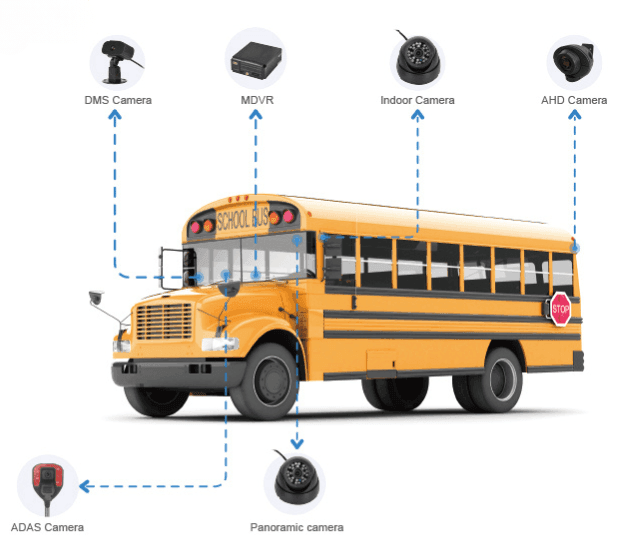
Introduction — the precipitant issue
Whereas operators frequently conflate telemetry convenience with evidentiary sufficiency, the immediate concern is whether collected geospatial records will withstand scrutiny when contested. Operators deploying AI MDVR must treat data capture not as an operational nicety but as a mechanism subject to procedural and admissibility requirements. The following problem-driven analysis identifies legal exposure points and prescribes concrete recordation practices suited to forensic and regulatory contexts.
The core legal problem: admissibility, integrity, and attribution
Failure to define and implement provable provenance for fleet records creates three discrete risks: (1) data may be excluded as unreliable; (2) the operator may face statutory penalties for noncompliance; (3) internal investigations yield inconclusive results. The underpinning technical deficits that produce these risks include unsynchronized clocks, gaps in recording, lack of tamper logs, and absence of unique device provenance. For counsel and compliance officers, these are not hypothetical defects but dispositive evidentiary failures.
What to track for defensible reporting
Record the following elements with forensic precision and immutable linkage to a device and time-source: • Timestamp (UTC, NTP-synchronized, with offset record); • GPS coordinates with HDOP/VDOP quality metrics; • Vehicle identifier (VIN or fleet asset number) and hardware serial; • Operator identity and authentication token; • Speed and heading with confidence intervals; • Event flags (harsh braking, collision detection, ignition on/off); • Multi-camera video index with file-hash; • Sensor telemetry (accelerometer, CAN-bus signals) and raw frames where applicable; • Tamper/diagnostic logs and hash-chain entries demonstrating chain of custody; • Retention metadata (ingest timestamp, retention policy applied). Each datum must be capable of being correlated to the subject device to establish prima facie provenance.
Integration requirements and chain-of-custody mechanics
Integration must produce a determinative audit trail. Pair GPS telemetry with a certified mdvr system that issues cryptographic hashes at the point of capture and records NTP reference sources. Maintain immutable indices that permit extraction of a singular evidentiary packet containing telemetry, video, and associated hash-metadata. Real-world operations—such as Transport for London fleet audits—routinely demand demonstrable timestamps and tamper logs as a condition of continued contract performance; absence of such evidence invites contractual remediation clauses. Preserve export routines that produce read-only forensic images and redaction-capable copies for disclosure.
Common pitfalls and their mitigations
Pitfall: unsynchronized device clocks leading to inconsistent timelines. Mitigation: enforce NTP/GPS PPS synchronization and log offset variances. Pitfall: fragmented storage with missing segments. Mitigation: implement redundant capture and confirm periodic integrity sweeps. Pitfall: opaque retention policies that conflict with regulatory duties. Mitigation: codify retention schedules and automate legal-hold overrides. Pitfall: video and telemetry stored in disparate systems without linking keys. Mitigation: embed universal identifiers and hash references in both streams. Pitfall: weak authentication for driver or technician access. Mitigation: enforce strong identity management and record every access as an auditable event.
Alternatives evaluated against evidentiary criteria
Telematics-only solutions deliver locational traces but lack contextual visual corroboration; they are cheaper yet inherently weaker when adjudicative weight is required. Standalone DVR solutions supply video but often omit synchronized CAN-bus telemetry or robust hashing. Fully integrated MDVR deployments provide combined telemetry, video, and cryptographic provenance suitable for legal processes. When resources constrain choice, prioritize systems that: (a) guarantee synchronized timestamps; (b) produce exportable forensic images; (c) support immutable audit trails. Vendors should be vetted for demonstrated deployment experience and documented incident-response procedures.
Implementation checklist for counsel and operations
Adopt written technical standards that specify: NTP/GPS synchronization; minimum telemetry frequency; video codec and retention format; cryptographic-hash schema; chain-of-custody export procedure; incident preservation protocol; role-based access control and logging; periodic integrity audits. Conduct quarterly audits and preserve one forensic image per incident with documented custodial transfer. Train personnel to treat captured data as potential legal evidence; require supervisors to certify preservation steps in writing.
Conclusion — resolving the problem through procedural fidelity
Remedial action is procedural and technical: mandate synchronized capture, cryptographic provenance, and auditable custody. The legal posture of any fleet operator hinges on whether its recorded data can be shown to be reliable, attributable, and unaltered. That posture is best secured through systems and processes that reconcile operational need with evidentiary rigour, as exemplified by providers with demonstrable field deployments and clear export-forensics capabilities, such as those developed by BSJ.