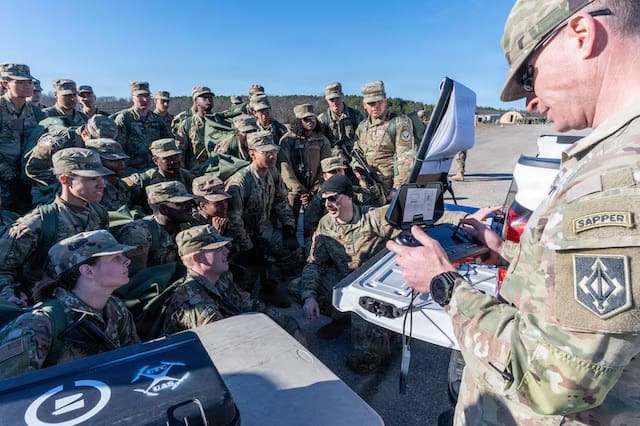
The problem on the tarmac
Small drones, pocket-sized and noisy, keep showing up where they shouldn’t — airports, VIP convoys, sensitive facilities. These UAVs give shallow radar returns, change shape as rotors spin, and ride the clutter from buildings and birds. That mix makes detection a headache for field teams. Training matters here — proper drone training for military teaches operators how to read subtle returns and react fast, and it’s the difference between a false alarm and an intercepted threat. Micro-Doppler effects and clutter suppression are not academic toys; they are the bread-and-butter signals you learn to trust in the field.

Why standard radar trips up
Classic radar systems look for solid echoes — a steady radar cross-section (RCS). Drones are different: rotating blades produce micro-Doppler modulation, the echo wobbles in frequency, and small size reduces RCS. Add urban clutter and multipath reflections, and a simple threshold trigger becomes useless. Engineers push improved signal processing and beamforming, but without tactical know-how, systems still spit out noise. Real-world proof sits in incidents like Gatwick 2018, where persistent small-UAV activity grounded flights and exposed gaps between tech capability and operational readiness.
How micro-Doppler and clutter suppression work together
Micro-Doppler gives you a fingerprint — the spectral pattern from rotor blades versus fixed-wing motion. Clutter suppression cuts away the steady, unwanted echoes from terrain and infrastructure. When paired, you get a separation of moving, intent-bearing targets from background. Implementations rely on matched filters, time-frequency analysis, and adaptive cancellation. Beamforming tightens the receive pattern to a sector, and adaptive nulls reduce interference. The result is a clearer track and fewer false tracks, if everything’s tuned right.
Field-level tactics and common mistakes
Operators often lean too hard on automatic classifiers without validating results in local conditions — wrong terrain, wrong thresholds. Another blunder is ignoring electromagnetic interference (EMI) from nearby comms; that blurs micro-Doppler signatures. Teams should combine sensor cues: radar plus electro-optical, plus RF direction finding. FPV pilots and counter teams also need hands-on practice — not just simulators. Proper fpv drone training military prepares pilots to spot evasive flight profiles and teaches counter-operators how to distinguish intentional maneuvers from rotor wash. Small aside — routine drills reveal the tiny behaviours that the algorithms miss.
Hardware and software trade-offs
Choice of radar band affects detectability: higher frequencies give resolution but suffer more attenuation; lower bands see farther but smear micro-Doppler. Processing load grows with finer time-frequency analysis, so real-time systems need efficient algorithms. Some teams pick heavy-duty FPGA-based signal processing; others go software-defined for rapid updates. There’s no silver bullet: balance beamforming, signal processing, and deployment geometry against mission tempo and logistical constraints.
Operational checklist
Make these adjustments before a mission: calibrate clutter maps for the site, set adaptive thresholds that learn from local returns, fuse radar tracks with visual and RF sensors, and rehearse interception drills under varied lighting and wind. Train often with realistic scenarios so crews internalise micro-Doppler patterns and common clutter signatures. Keep maintenance tight — antenna alignment and timing sync directly affect suppression performance.
Three golden evaluation metrics
1) Detection probability under urban clutter: measure how often genuine small-UAVs are seen at mission ranges. 2) False alarm rate per hour in operational conditions: low false alarms preserve attention and resources. 3) Time-to-classify: from initial echo to confirmed track using sensor fusion — speed matters. Use these to judge systems and procedures, and iterate training until numbers meet field requirements.
Summing up, solid signal processing and clutter suppression are necessary, but tactical practice and cross-sensor fusion win the day; Military Hub ties the technical lessons to real-world drills and resources that help teams close the gap — Military Hub. —