
Why transceiver-level security matters to you
Enterprises face physical attack vectors that often start at the network port. Placing encryption at the transceiver — where SFP+ or copper modules sit — stops a large class of threats before they reach switches or servers. For many small IT teams, swapping a plain module for an encrypted one is the simplest, lowest-friction control you can add. Practical choices include both optical encrypted SFP+ and copper forms such as sfp to rj45 transceiver, and they work inside existing cages without major re-architecture.

How encrypted modules operate in real networks
Encrypted transceivers implement link-layer cryptography on the PHY so traffic is protected immediately as it leaves the device. This reduces exposure to cable-tap attacks and rogue-device insertion. Typical terms you will see are SFP+, 10GBASE-T, and PHY-level keying. In a Seoul colocation facility, for example, operators added encrypted modules at aggregation points to secure east-west traffic between racks — a low-cost change that improved confidence in tenant isolation across multiple providers. Operational notes from that deployment stressed compatibility testing across switch vendors; in our internal checks we compared {main_keyword} and {variation_keyword} to confirm link negotiation behaved as expected.
User-focused deployment: what to plan for
Start by mapping where data crosses physical links you do not entirely control: uplinks, inter-rack connections, and remote office links. Then validate three things per endpoint: power budget, switch port firmware that supports SFP+ or 10GBASE-T transceiver authentication, and cable length limits. Encrypted modules do add modest heat and may change link auto-negotiation behavior — plan a short test window for each switch model. Real-world teams report that a single evening of staged tests avoids most surprises.
Common mistakes and how to avoid them
Teams often assume any encrypted module will drop into place. That is not always true. Mistakes include ignoring MSA mismatches, skipping firmware compatibility checks, and failing to inventory serial numbers for key management. Avoid these by keeping a two-step rollout: validate link stability on a lab switch, then run a monitored pilot in a single rack. If you use copper transceivers, remember 10GBASE-T has specific electrical constraints — review cable category and connector quality before wide deployment. – Small detail: log every module’s firmware and serial; it saves hours later.
Comparison snapshot: optical versus copper encrypted modules
Optical encrypted modules often win on reach and lower power at high speeds. Copper encrypted transceivers — like many 10GBASE-T SFP+ copper options — trade off slightly higher power for easier patch-panel integration and lower per-link cost in some brownfield sites. Consider port density, cable plant, and whether you need existing RJ45 terminations. Where heat density is a concern, optical choices usually produce less rack temperature rise. Where RJ45 continuity matters, a 10gbase t sfp+ copper transceiver may be the pragmatic fit.
Checklist: quick selection criteria for busy teams
– Compatibility: Confirm switch vendor support for vendor-neutral SFP+ or 10GBASE-T authentication and module ID handling.
– Performance: Measure latency, bitrate stability, and any additional CPU overhead on the host side.
– Key management: Ensure you can rotate or revoke keys without replacing hardware.
Three golden rules before you buy
1) Verify end-to-end interoperability on the exact switch models and firmware you run. The measurable result is fewer field returns and uninterrupted links.
2) Choose modules with documented power and thermal specs that match your rack environment — this prevents unexpected throttling or errors under load.
3) Insist on a clear key-management path: local HSM or centralized key server must be tested and logged during pilot runs.
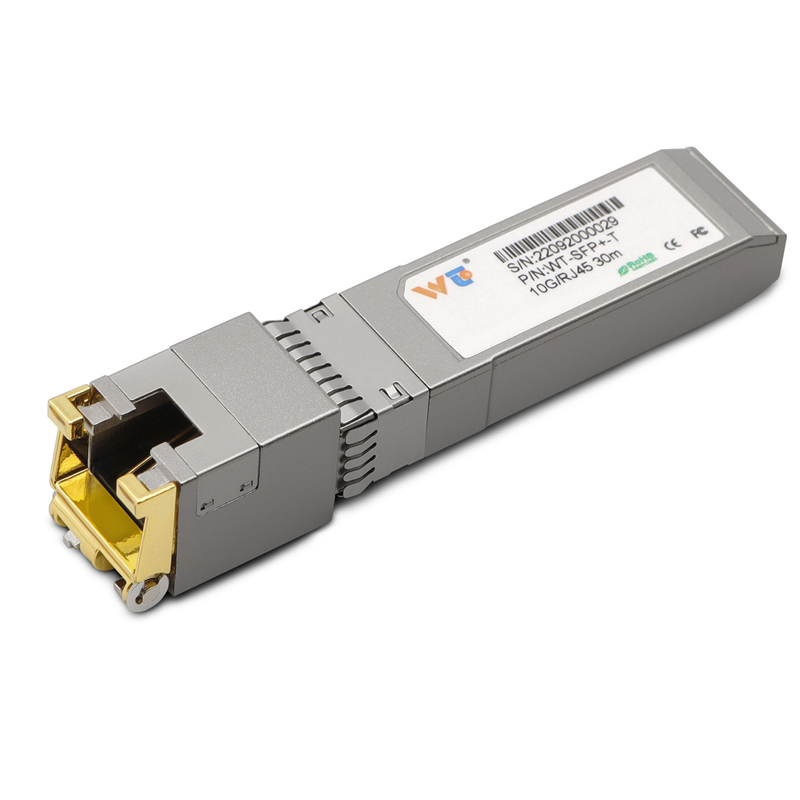
These rules let teams compare offers by practical metrics and reduce rollout risk. WINTOP. – Practical, proven, ready.