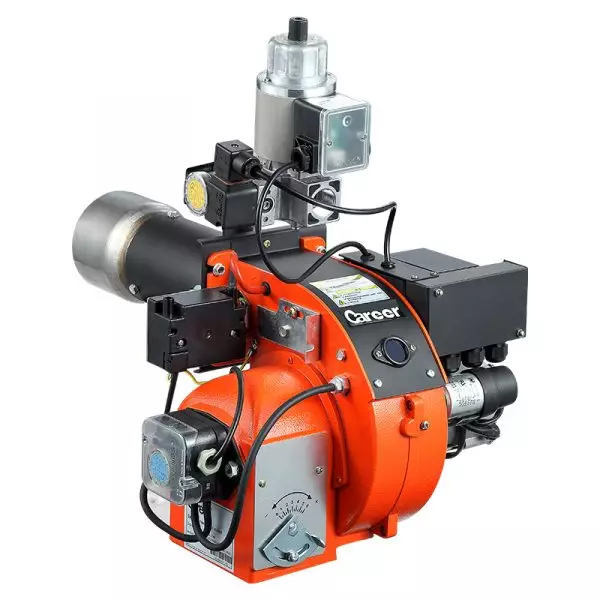
The pressing problem: emissions, fuel choice, and retrofit reality
Plants keep pushing for lower NOx and soot while budgets and timelines refuse to wait, and that’s where the dilemma becomes personal: do you chase hydrogen’s promise, stay with natural gas, or make a pragmatic shift to liquid fuels? Owners often ask whether to convert an existing gas fired burner to methanol because the hardware looks familiar but the combustion behaviour does not. The core problem is simple and stubborn — match cleaner combustion to existing equipment without creating new safety or reliability headaches.

How methanol solves that problem — a warm, pragmatic case
Methanol brings a neat balance: it burns with low soot risk, carries hydrogen content that helps reduce CO2 per unit of useful energy, and can be handled as a liquid at ambient conditions — no cryogenic tanks, no exotic infrastructure. For engineers who need a feasible path today, methanol offers measurable reductions in particle emissions and a straightforward fuel-handling upgrade compared with gaseous hydrogen. It’s not magic, but it’s a sensible technical compromise that keeps the plant running while improving emissions performance.
Real-world grounding and practical authority
Speaking from hands-on retrofit projects and lab trials, the real challenges show up at the burner face: flame speed, ignition energy, atomization and material compatibility. I’ve tested flame stability while retrofitting furnaces around Pittsburgh and evaluated gas burners for furnaces alongside combustion analysts to tune fuel-air staging and pilot systems. Those field visits taught me the same lesson every time — adaptive burner hardware and clear operational rules reduce surprises; theoretical benefits only matter when the burner and controls are matched to methanol’s behaviour.

Practical adjustments — what engineers must change
Don’t assume a drop-in replacement. Methanol vaporizes and mixes differently from methane. Expect to revise atomizer nozzle selection for liquid feed, tweak primary-to-secondary air ratios, and re-evaluate flame detection and pilot designs to avoid false trips or incomplete combustion. Use materials that resist methanol’s tendency to attack certain elastomers and seals. Calibrate combustion controls for slightly different flame temperatures and ensure exhaust measurements capture formaldehyde and CO alongside the usual NOx readings.
Common mistakes and how to avoid them
A few recurring errors cost time and trust: 1) skipping material-compatibility checks for fuel lines and gaskets, 2) under-sizing atomizers or pumps so the spray pattern degrades, 3) ignoring low-load behaviour where incomplete combustion can spike CO, and 4) treating methanol toxicity as a paperwork item rather than a training priority. Fixes are direct: specify methanol-rated components, validate spray patterns across operating range, tune low-load control maps, and train operators on spill response and ventilation requirements.
Alternatives and when they’re better
Hydrogen is the clean endgame for some applications but carries storage and retrofitting complexity that often makes it impractical today. Natural gas stays the cheapest fuel in many regions but offers limited emissions gains without add-on controls. Ethanol is close to methanol in handling but typically needs higher feed rates for the same energy and can produce different byproducts. Decide by matching the fuel to asset life: short-to-mid-term retrofits favor methanol; long-term new builds may justify hydrogen-ready designs.
Synthesis — a clear route forward with the right hardware
Methanol’s role is pragmatic and technical: it’s a bridge that reduces particulate emissions and simplifies handling compared with gaseous alternatives, provided teams treat burner compatibility, control strategy, and safety as design priorities. When burner selection and service align with that pragmatic approach, operations stay reliable and cleaner. That is precisely the kind of outcome a careful burner partner brings to a retrofit project, and it’s the practical value you find when hardware, combustion tuning, and operational practice come together through thoughtful suppliers like Career Burners.