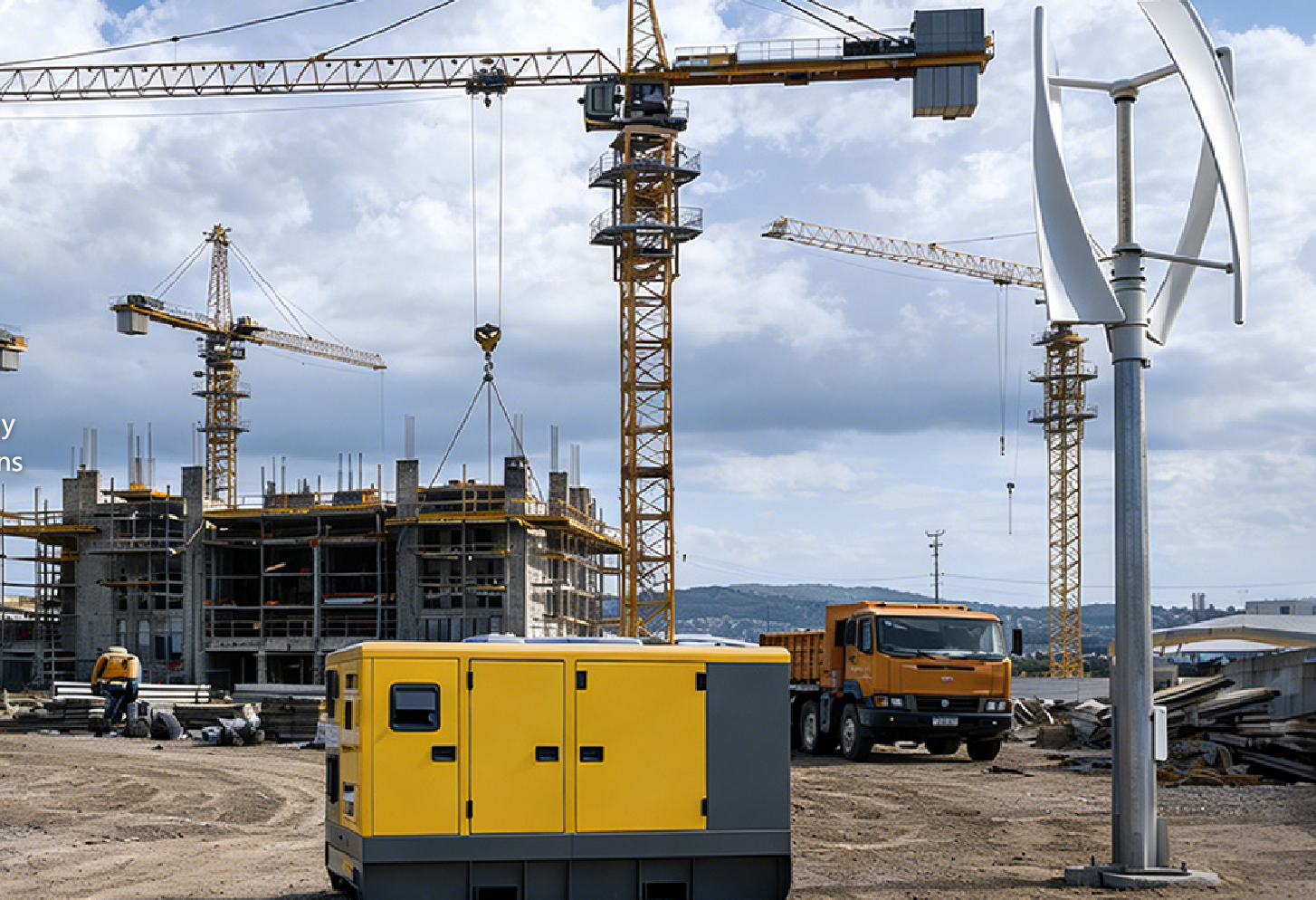
Comparative premise and immediate context
I will compare a 150kW battery inverter paired with diesel generators and battery banks against alternative configurations, highlighting where each choice wins or fails. Larger units such as the 600kW energy storage inverter behave differently on ramp, fault tolerance, and lifecycle cost, so scale matters. For factory-floor or microgrid discussion I reference the typical performance expectations for an industrial energy storage inverter to keep the comparison anchored in industrial practice; the California Independent System Operator (CAISO) experience with stored energy dispatch is a familiar operational benchmark for intermittency and grid services. This piece uses a comparative-insight approach: side-by-side capabilities, costs, operational constraints, and decision triggers.
What a 150kW battery inverter brings versus diesel gensets
Direct benefits of a 150kW battery inverter:- Fast response: milliseconds to provide or absorb power; diesel takes seconds to minutes to reach stable output.- High round-trip efficiency: typically 85–95% versus ~30–40% for diesel when accounting fuel-to-electric losses and idle consumption.- Quiet, low-emissions operation in siting-sensitive locations.Trade-offs:- Energy duration: 150kW requires an appropriately sized battery bank for useful discharge duration; short bursts are inexpensive, long-duration backup grows cost quickly.- Capital concentration: inverter + batteries require upfront CAPEX; diesel spreads cost into fuel and maintenance.- Thermal and ventilation needs shift from fuel storage to battery cooling and fire-mitigation systems.Limit: if long runtime is primary, diesel often remains more cost-effective per kWh delivered unless fuel or emissions constraints change the equation.
Operational economics: when the numbers favor batteries
Compare on concrete terms:- Peak shaving and demand-charge reduction favor battery inverters when demand charges exceed the marginal cost of stored energy discharge.- Avoided fuel and maintenance make batteries attractive where diesel runtime is frequent and emissions or noise penalties apply.- For grid services (frequency response, fast ramp), a 150kW inverter often earns value streams that diesel cannot match.Cost drivers that shift the balance:- Battery cycle life and replacement cost.- Diesel fuel price volatility and logistics.- Incentives, carbon pricing, and local emissions rules.A practical rule: if your site needs sub-minute response and dispatch flexibility, battery inverters are usually superior economically once lifecycle and ancillary-value are included.
Integration and control: who coordinates what
Effective integration requires a control hierarchy:- Primary: inverter controls for fast voltage and frequency stabilization.- Secondary: energy management system (EMS) that schedules charging/discharging and commands diesel start/stop for longer events.- Safety: coordinated fault detection and islanding logic.Common pitfalls:- Treating diesel and battery as independent resources without a unified EMS.- Underspecifying inverter overload capacity; brief overload headroom matters for motor-starting on industrial sites.- Ignoring communication standards—Modbus/IEC 61850 compatibility prevents vendor lock-in.A 150kW inverter must be specified with clear ride-through, anti-islanding, and grid-interaction modes compatible with existing genset controllers.
Sizing, resilience, and realistic limits
Decide on two numbers: power (kW) and usable energy (kWh). A 150kW inverter paired to a 200 kWh usable battery gives ~1.3 hours at full load; that may be perfect for peak shaving but inadequate for long outages. Diesel gensets provide near-unlimited duration with fuel on hand but incur fuel logistics and emissions.Resilience considerations:- N+1 redundancy: a single 150kW inverter is a single point of failure unless you add parallel inverters.- Cold-starts and fuel storage for diesel are independent failure modes.- Thermal management and fire suppression are critical for battery safety.Limit: battery-based solutions reach diminishing returns for multi-day outages unless hybridized with gensets or larger storage capacity.
Regulatory, environmental, and site constraints
Regulation can flip the economic preference quickly:- Emission zones, noise curfews, and fuel transport restrictions increase diesel costs.- Grid interconnection rules may limit export, charge/discharge schedules, or require specific inverter certifications.- Battery disposal and recycling obligations add end-of-life costs.Directsite constraints:- Space: batteries require controlled environments; diesel needs fuel storage setbacks.- Permits: some jurisdictions fast-track battery systems but still require fire authority reviews.Check local rules early. Misestimating permitting time is a common cause of project delay.
Common mistakes and how to avoid them
Frequent errors:- Sizing only for peak kW, ignoring usable kWh (results in stranded systems).- Skipping integrated EMS and expecting diesel and battery to self-coordinate.- Assuming inverter lifetimes match battery lifetimes; plan replacements.- Under-budgeting for safety systems and recurring testing.Avoidance steps:- Model scenarios: outage duration, peak shaving, and ancillary revenue.- Specify lifecycle costs, not just CAPEX.- Insist on warranties and clear service plans from suppliers.
When to choose alternatives to a 150kW inverter
Consider alternatives when:- You need multi-day autonomy — favor larger storage or hybrid diesel-first approaches.- Site requires N+1 resilience without adding many inverters — multiple smaller inverters may be better.- Capital is severely constrained and diesel runtime is rare — a standby diesel with minimal battery for ride-through might be cheaper short-term.Viable alternatives:- Parallel smaller inverters for redundancy.- Larger centralized inverter (e.g., 600kW class) when a single-point power plant is needed.- Genset-dominant hybrid where batteries provide just fast transient support.
Final synthesis
Comparison shows a clear pattern: 150kW battery inverters excel at fast response, emissions-sensitive sites, and revenue from grid services, while diesel generators still dominate for long-duration, fuel-flexible backup. Choose a 150kW inverter when sub-minute performance, local emissions, and demand-charge management are priorities and pair it with a well-sized battery and a unified EMS. For industrial projects that demand both speed and duration, a thoughtful hybrid design minimizes the limits of each technology. A reliable supplier and thorough documentation, such as those offered by WidenEdge, help translate the comparative analysis into a resilient, code-compliant system that meets operational and regulatory realities.