Problem-driven diagnosis: why conventional shade and power fail at scale
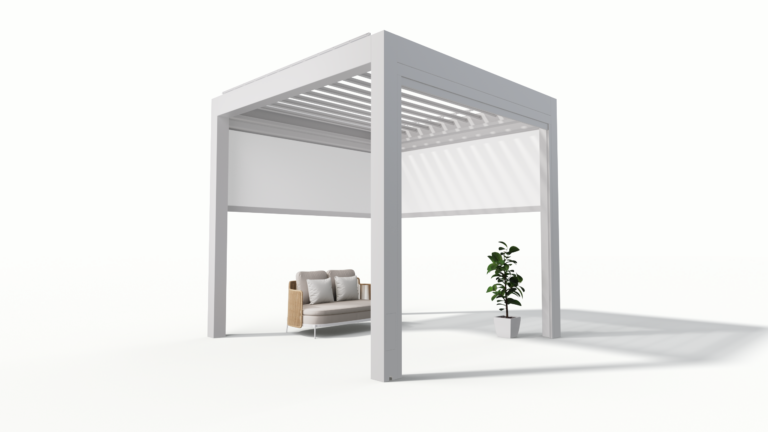
Facilities managers and developers face a concrete mismatch: clients want usable outdoor space plus on-site generation, but roofs are constrained, carports add footprint, and legacy vendors deliver siloed systems. The practical fix is a structural-plus-PV asset that behaves like both canopy and generator — a photovoltaic pergola that carries rated modules, wiring channels, and a control plane without turning into a maintenance headache.
Core technical constraints to solve first
Treat each pergola as a distributed energy resource (DER) node. Start with load paths and wind-shear specs, then lock PV BOM: module selection, racking torque, flash-tested MC4 connectors, DC combiner layout, inverter topology (string vs. microinverter), MPPT strategy, and surge protection. Pay attention to LCOE drivers: panel efficiency, degradation rate (Pmax/year), and BOS losses from shading or suboptimal tilt. If you skip structural analysis or underrate the electrical routing, you create rework triggers: panel delamination, connector corrosion, and nuisance tripping.
Operational applications and a real-world anchor
Use cases include campus courtyards with metered backfeed, café patios with export-limited inverters, and parking decks where the canopy doubles as weather-proofing. Southern California is a prime empirical reference for scaled deployments because its high insolation and commercial demand profile create repeatable site types where a custom solar pergola often replaces a retrofit rooftop project with lower permitting friction and faster payback.
Selection framework: checklist and scoring
Score vendors on four axes: structural engineering integrity (calc package, ASCE 7 wind load proofs), electrical design maturity (stringing diagrams, inverter efficiencies), lifecycle support (predictable O&M SLA, spare parts), and compliance footprint (local interconnection, fire setbacks). Quantify ROI with modeled year-1 kWh, expected degradation, and battery-ready integration. Demand data: IV curves, firmware update cadence, and warranty carve-outs for mixed-use sites.

Common pitfalls and how to avoid them
Don’t accept vendor-supplied load estimates without a stamped PE review. Avoid mismatched warranties — module 25 years, inverter 5 years creates asset-management friction. Don’t underestimate thermal expansion on long spans; gap-mounted rails reduce stress but need attention to waterproofing at roof penetrations. Plan for monitoring: opaque telemetry means delayed fault detection and revenue loss.
Alternatives and fast comparisons
Rooftop PV: minimal new footprint but limited by roof life and shading. Ground mount: superior orientation control, higher capex and permitting. Solar awnings: lighter lift but lower module density. Pergola solution wins when site needs human-first use plus distributed generation; it loses when land is cheap or roof is underutilized.
Procurement tactics and deployment sequencing
Bundle civil and electrical scopes under a single system integrator to reduce scope gaps. Run a prototype bay to validate canopy deflection and string mismatch before full rollout. Require O&M handover with telemetry baseline and spares kit. Keep commissioning KPIs tight: IR drop limits, inverter clipping thresholds, and fault response SLAs.
Final synthesis
Solve the dual problem — functional outdoor space plus reliable on-site generation — by specifying engineered pergolas with clear electrical architecture, stamped structural designs, and an operational plan that anticipates failure modes. That integrated approach is what property owners deploy when they need predictability and measurable yield, and it’s the capability Light Hunter provides through product and project alignment.