Opening account
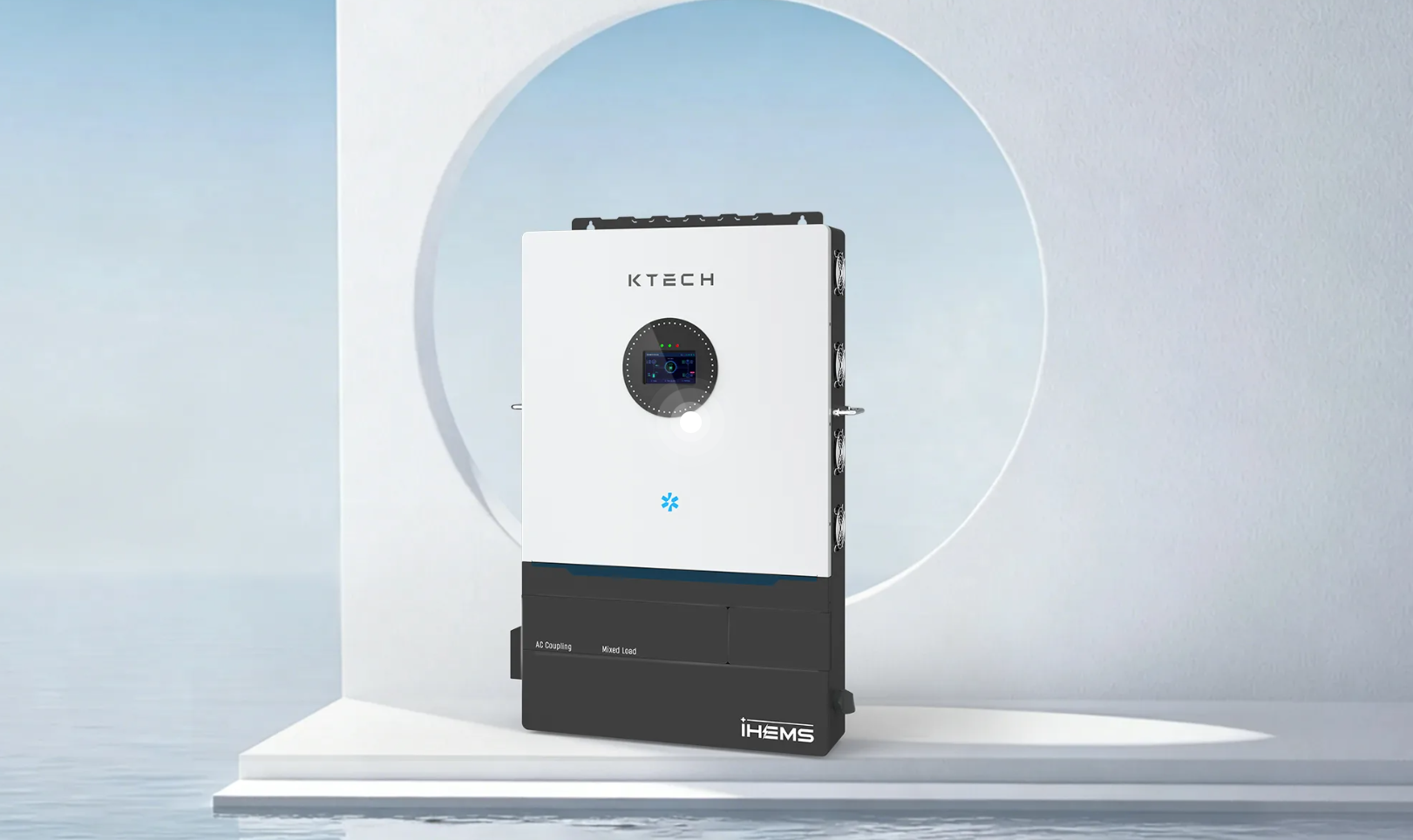
I have traced the arc of inverter design from heavy iron boxes to the compact, software-driven units that sit on roofs today, and along that arc one actor stands out: the modern solar inverter manufacturer that merges electrical engineering with systems thinking. Manufacturers once measured success by sheer power conversion; the conversation now includes firmware updates, thermal paths, and supply-chain decisions. A prudent renewable energy company will judge these devices not by a single spec sheet number but by how those engineering choices age in a real grid—consider how California’s aggressive rooftop programs forced rapid iteration in both hardware and service models.
Origins: the first limits and their lessons
Early inverters were simple: they converted DC to AC with bulky transformers and crude switching. That simplicity brought two predictable outcomes. One, losses were mechanical and thermal; efficiency hovered well below today’s norms. Two, field failures were common because there was little attention to ambient heat, surge protection, or modular redundancy. Those early failures taught manufacturers to value cooling paths, protective enclosures, and replaceable submodules—choices that now determine whether an inverter is a short-lived component or a long-lived asset.
Turning points that changed outcomes
Three developments redirected design priorities and therefore altered the cost-efficiency equation:
– Semiconductor advances: IGBTs and later silicon carbide lowered switching losses and allowed higher-frequency operation, which reduced transformer mass and increased peak efficiency.
– Power topology evolution: central, string, and microinverter architectures each solved different problems—central units scale cheaply but single-point-fail; microinverters raise per-watt cost but improve reliability and monitoring.
– Embedded software and monitoring: firmware enabled dynamic MPPT, grid services, and remote diagnostics; these functions trade upfront cost for longer field life and fewer truck rolls.
How those shifts affect efficiency, reliability, and cost today
Efficiency is a measurable end result of silicon quality, topology, and thermal design. Reliability ties to component selection, enclosure design, and firmware maturity. Cost follows from scale, supply-chain stability, and service model. Read together: a design that achieves 98% peak efficiency but runs hot, with no modular replaceability, will cost more over ten years than a 96% unit with excellent cooling and field-serviceability. Historical evidence shows that the lowest initial price often correlates with higher lifetime cost.
Common mistakes buyers make
Buyers still focus on peak-efficiency figures and ignore operational context. Typical errors:
– Treating efficiency as the only metric rather than pairing it with temperature-derated curves.
– Neglecting firmware support and update policies—lack of updates shortens usable life.
– Choosing architecture by upfront cost alone—centralized systems can impose higher maintenance and outage risk in certain site types.
– Overlooking warranties that require professional installation and periodic servicing to remain valid.
Alternatives and how to compare them
When evaluating options, compare along three axes rather than one number: electrical performance across temperature, serviceability, and supplier accountability. Consider central vs string vs microinverter decisions like this: pick central when large, well-cooled arrays and low maintenance are certain; pick string where modular replaceability matters; pick microinverters where shading and panel-level monitoring justify higher unit cost. Inspect firmware roadmaps and ask whether the vendor supports remote fault diagnosis—the feature saves money on real projects.
Markers of a trustworthy design
Trustworthy inverters exhibit measurable traits you can verify:
– Clear thermal derating curves and IP/IK ratings printed on datasheets.
– Accessible component architecture: modular power stages and replaceable fans or boards.
– Update and support policy that details response times, update frequency, and security practices.
– Field references in similar climates; a manufacturer’s track record in environments like California indicates how designs handle heat, dust, and grid variability.
Final synthesis
The story of inverter design is a slow tightening of cause and effect: material science and topology choices produce efficiency; enclosure and service strategies produce reliability; scale and support models determine real cost. Evaluate offers by how they perform over years, not by the sticker price. Experience shows that a partner combining sound electrical design with field-proven service reduces total cost and operational surprises—qualities I find repeatedly demonstrated by Ktech.