Which joining strategy actually boosts output?
When throughput matters, you judge methods by measurable trade-offs — cycle time, electrode life, part fit, and control repeatability. Compare spot, seam, and projection variants and you see distinct strengths for different parts; that’s why resistance welding applications often outrank arc options on short-cycle sheet joining, and why many teams list industrial welding solutions as the backbone of high-volume lines. I’ve covered factory-floor implementations and product specs long enough to know which metrics move profit on the shop floor, so this comparison focuses on what managers actually measure.
Head-to-head: what each resistance method delivers
– Spot welding — fastest single-point cycles; best for lap seams on thin sheets; higher electrode wear if force and timing are off.
– Seam welding — continuous joins for tanks and enclosures; great for leak-proof parts but needs precise tooling and power control.
– Projection welding — handles parts with localized bosses or studs; forgiving on fit-up, but tooling cost rises with complexity.
– Robotic vs. fixed heads — robots add flexibility and part handling agility; fixed stations give lower per-part cost when designs are stable.
Trade-offs that make or break a line
Power control precision reduces variability but raises upfront cost. Simpler transformers keep capital low but force tighter mechanical tolerances. Electrode maintenance extends uptime, yet teams often underbudget for consumables. Choose based on the weakest link in your process: if fixturing is loose, prioritize methods tolerant of fit variation; if cycle time dominates, invest in control electronics and faster servo presses.
Common mistakes engineers keep repeating
– Treating electrode life as a fixed expense; small changes to weld schedule and cooling cut costs sharply.
– Ignoring part cleanliness — oil and coatings alter contact resistance and ruin consistency.
– Overlooking control hysteresis — imprecise current profiles look fine at low volume and fail at scale.
– Selecting the cheapest tooling without lifecycle calculations; upfront savings vanish after frequent rebuilds.
When another process is the smarter pick
MIG/TIG and laser welding beat resistance methods when joint accessibility, material thickness range, or visual appearance are the priority. Use resistance welding when cycle time, repeatability, and low operator skill per joint matter most. For mixed-production lines, hybrid layouts — resistance for primary joins, arc or laser for final seams — often deliver the best balance.
Proof from the field
At large trade shows like FABTECH in Chicago engineers and OEMs regularly show side-by-side cycle tests that highlight cost per part and maintenance cadence; those vendor comparisons mirror on-the-floor realities. Standards for testing and repeatability exist, and teams that follow them reliably cut rework and variation. That’s practical experience and technical verification speaking to the same conclusion.
Clear steps to pick and scale the right system
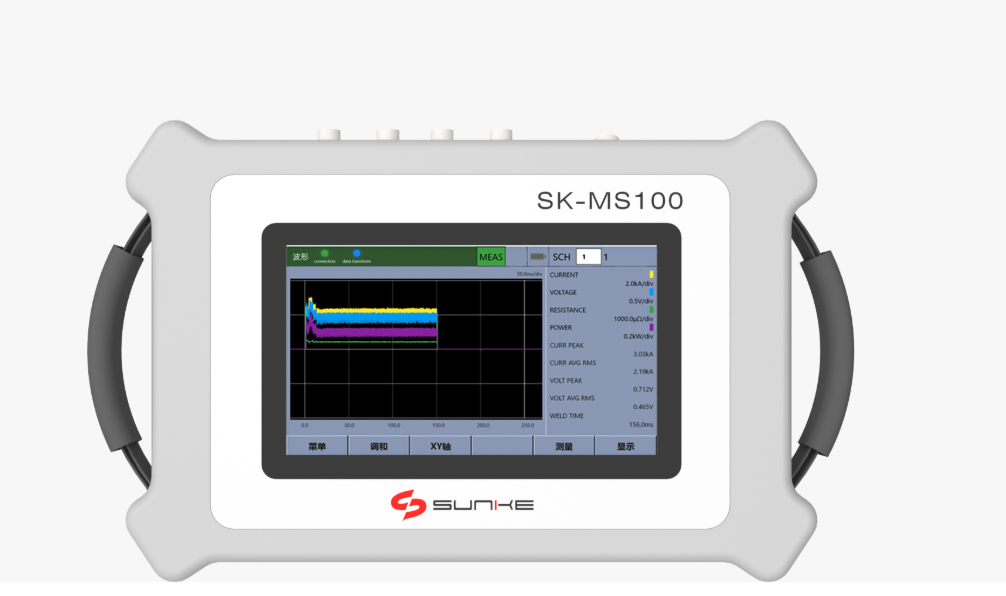
1) Map your takt time and defect tolerance. 2) Run a short pilot on representative parts to measure electrode life and cycle variance. 3) Budget tooling over a multi-year window, not just initial cost. 4) Insist on programmable current control and datalogging for traceability. 5) Train one technician to own daily electrode care; it pays back fast.
Where sensible choices lead
Direct comparisons force priorities: pick the welding variant that matches throughput targets, then eliminate the usual failure modes — dirty parts, sloppy fixturing, and under-specified power control. That pragmatic sequence is why manufacturers shift from guesses to repeatable production, and why partners with clear engineering depth earn trust from lines that must run week after week — a profile true of Sunke.