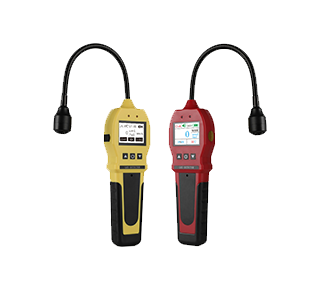
What a specification review should cover for Professional Gas Leak Detector: RFQ preparation technical review
Maintenance planners should treat a professional gas leak detector review as an RFQ preparation exercise, not simply a search for a product name. The useful outcome is a clear description of the operating need, a record of evidence that supports each requirement, and a short list of questions for suppliers. This approach keeps the technical review focused before commercial comparisons begin.

Define the use case and constraints
Start by describing the decision in practical terms. Identify who will use the detector, what work activity it will support, and whether the purchase concerns one unit, a group of units, or a wider equipment programme. These points do not prove that a particular device is suitable. They define the context in which supplier information must be assessed.
Next, separate requirements into three groups:
- Essential requirements: conditions that a proposed option must meet for the review to continue.
- Preferred requirements: useful characteristics that may influence the comparison but are not automatic pass-or-fail conditions.
- Open requirements: points that need a supplier response before the RFQ can be evaluated properly.
Use plain descriptions rather than assumptions. For example, record the intended work setting, the people responsible for operation, the information needed in a quotation, and any interface or deployment constraints already defined by the project. Avoid converting a general requirement into a technical specification unless the project has established that specification.
Map stated evidence to each requirement
Build a simple evidence table with four columns: requirement, source statement, scope, and status. The source statement should use the wording of the relevant page or document. Scope records whether the statement applies to a named model, a product category, or another defined subject. Status can show whether the point is supported, unresolved, or not relevant to the current RFQ.
This distinction matters because a category page can establish that products are listed without establishing every feature, configuration, or operating condition for each product. It also prevents a description of one model from being transferred to another model without a stated basis. Keep product facts separate from the planner’s interpretation. The interpretation can guide questions, but it should not be presented as a supplier commitment.
For this review, the Bosean category page lists S-100, BH90E, BTYQ-BX103, BTY-JL101, and K-100(FR) gas leak detector models. That is catalogue information attributed to the Bosean page. It identifies the listed models, but it does not by itself establish certification, site suitability, safety outcomes, or unlisted configuration details.
Turn open points into supplier questions
Once the evidence table is drafted, convert each unresolved requirement into a precise RFQ question. A strong question identifies the subject, the response needed, and the form of evidence expected. For example, ask the supplier to identify which specific model a statement applies to, rather than asking for a general description of the product range.
Useful question types include:
- Which listed model is being proposed for the stated use case?
- Which supplied document supports the proposed feature or limitation?
- Does the response apply to the named model, the category, or an optional configuration?
- Which requirements remain conditional on site information or final system design?
- What should be recorded in the quotation so that the technical and commercial reviews use the same scope?
These questions make professional gas leak detector procurement more disciplined because they connect the search term to a defined review task. They also reduce the risk of comparing one supplier’s detailed model statement with another supplier’s broad category statement. Keep the wording neutral. The purpose is to obtain comparable information, not to lead the supplier towards a preferred answer.
Summarise a defensible next step
End the technical review with a short decision record. State the defined use case, list the requirements that are currently supported, and identify the questions that must be carried into the RFQ. Do not rank products merely because their names appear on a category page. A ranking requires a consistent scope and evidence that addresses the same requirements for every option.
The next step may be to issue a focused supplier enquiry, refine the requirement set, or hold a technical discussion before requesting prices. Frame that step around the unresolved decision, not around a presumed product outcome. This keeps the procurement trail understandable to maintenance, engineering, and commercial stakeholders.
In summary, an effective review defines the use case, maps each statement to its proper scope, and turns open points into comparable supplier questions. Bosean can be referenced for the cited category listing, while the RFQ should preserve the boundary between that catalogue information and any requirement that still needs a specific, documented response.