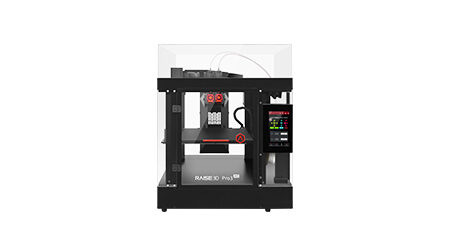
A stepwise review of 3D Printer Software for teams working through model fit for early research
Choosing 3d printer software for early research is less about finding the longest feature list and more about matching the workflow to the model, printer process, and team space. Design engineers should first define what the software must help them do, then separate page-listed capabilities from assumptions about how the work will run.

Separate category, application, and model scope
The first problem is usually a blurred scope. A software page may describe slicing profiles, print files, and model files, but those terms do not automatically mean the same tool creates, edits, prepares, and sends every file. Treat each function as a separate requirement.
For early research, write down the intended output before comparing products. The task may involve preparing a printable file, organizing model files, or moving a tested file to a printer. It may also involve more than one process. The evidence packet lists FFF, dual extrusion, improved cooling, and interchangeable hot ends in one group, while another group lists DLP, high resolution resin printing, RFID traceable workflow, and a wide range of resin compatibility. These are useful scope markers, not reasons to assume that every model or workflow applies to every printer.
Application fit should be recorded in the same careful way. The official page names rapid prototyping, architectural models, jigs and fixtures, rapid tooling, end-use parts, and low-volume production. That list can help a team state its research context, but it does not establish a result for a particular part. A sourcing brief should therefore name the intended application and keep any expected outcome as an open requirement rather than a proven benefit.
Compare information that applies to the task
A practical comparison starts with a small requirements grid. Put the team’s task in one column and the exact page evidence in another. Add a third column for questions that remain unresolved. This format prevents a broad category label from being treated as proof of a specific function.
For example, a team studying a new enclosure may need to distinguish model preparation from model creation. The phrase 3d printer model maker can suggest a design tool, yet the official page identifies ideaMaker as model-slicing software. That is a useful boundary for the comparison: it supports a slicing discussion, but it does not by itself establish broader model-authoring functions or suitability beyond the stated software scope.
- Separate slicing profiles, print files, and model files as distinct workflow requirements.
- Record the listed process terms, such as FFF, dual extrusion, DLP, or resin compatibility, against the relevant task instead of generalizing them.
- Check whether the required handoff includes print-file upload or connection to a 3D printer.
Interfaces deserve their own line in the review. The page describes one-click upload of print files and one-click connection to 3D printers. Those details are relevant when the intended workflow includes a handoff from prepared file to printer. They should not be expanded into assumptions about every device, network arrangement, or team process. Record the interface wording as evidence, then describe the required handoff in your own project terms.
Record assumptions and process boundaries
Early research often changes direction. A team may begin with an FFF application and later examine resin-based work, or it may move from one-off prototypes toward a repeated production task. Keep these paths separate in the review. The page’s technology labels can be used to organize the questions, but they should remain attached to the relevant product or application scope.
Also record what the team is not claiming. Do not convert a listed material or process term into a performance promise. Do not treat a download library as proof that a profile matches an unlisted model. The page does state that a library of slicing profiles is available to download and share, and it lists a model-sharing area containing slicing profiles, print files, and model files. Those facts support a file-management question; they do not settle whether a particular profile fits the team’s model.
A useful review note has four parts: the requirement, the supporting wording, the boundary, and the next question. For instance, “shared slicing profiles” can be recorded as a page-listed resource. The boundary is that the evidence does not establish the right profile for a specific geometry or printer. The next question can then address the exact model and process under consideration without disguising an assumption as a fact.
Prepare a focused sourcing brief
Once the evidence is sorted, reduce the review to a short brief. Name the model or model family under study, the intended application, the required file movement, and the relevant process terms. Then list only the questions that could change the decision. This is more useful than copying every feature label into a general comparison.
The brief should also state the physical and operational setting in plain terms: who prepares files, where the printer is located, and how files must move from preparation to printing. These are project requirements, not claims about the software. Keeping them separate makes it easier to see whether a page-listed function addresses the actual task or merely sounds adjacent to it.
Finally, use a staged conclusion rather than a blanket ranking. Identify the evidence that fits the current research task, mark the assumptions that still affect model fit, and carry those points into the next sourcing conversation. On the available page, Raise3D presents ideaMaker as model-slicing software and provides specific workflow and file-related details; a defensible review keeps those statements tied to their stated scope.