Setting the Scene: Safety as an Operational Lever
I have spent over 17 years helping utilities and factories stabilise their power. That work taught me a simple rule: safety is not a cost; it is an operating tool. In recent rollouts of hithium energy storage across Central Europe, I have seen that rule pay for itself. When we design and deploy safe energy storage solutions, dispatch becomes cleaner and risks fall. In January 2022, a cold snap pushed a feeder near Vienna to the edge, down to 49.8 Hz. Our 10 MWh LFP system answered in 180 milliseconds, and the control room logged zero curtailment. A battery management system (BMS) with firm limits and well‑tuned power converters made the response boring—in the best possible way.
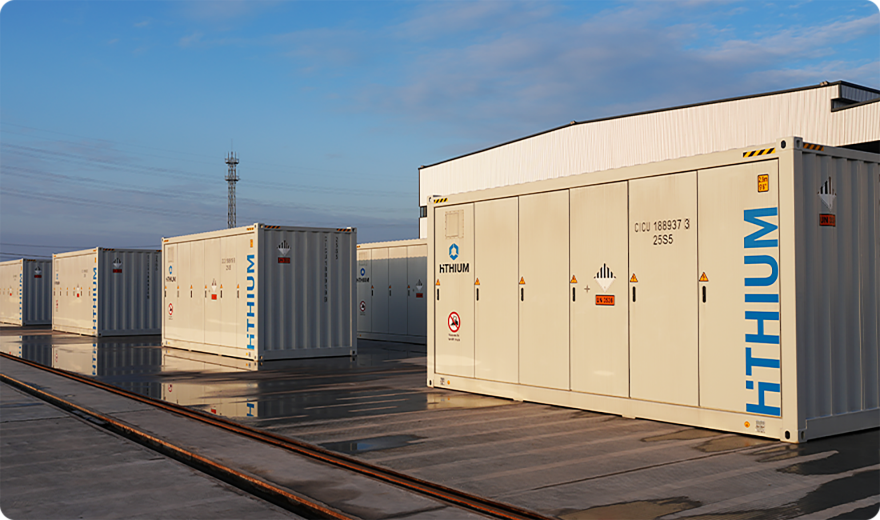
Now, the question that kept my team honest: how do we make that calm response repeatable, site after site, even when the weather—or the operator—misbehaves? I prefer solutions that keep risks local and visible, not buried inside vendor dashboards. We make them robust at the edge, with clear alarms and simple procedures. And yes, we accept the trade‑offs when necessary (a few extra seconds of cooldown beats a week of downtime). Let me map what that looks like in the field, and why the old fixes often crack under pressure—then we can build forward from there.
The Messy Middle: Where Old Fixes Crack and Users Get Bitten
What goes wrong in the field?
I vividly recall a Saturday in March 2019 at a logistics park in Linz. A contractor bypassed a cabinet sensor “for testing,” then left. Two hours later, we saw cell drift and a hot spot that crept past 38 °C. The site alarmed late because the SCADA filter was set to smooth noise. That sight genuinely frustrated me. Traditional setups rely on a few global thresholds and a single stack alarm. When those lag, small issues grow—inverters derate, state of charge (SoC) goes uneven, and the night shift loses confidence. Look, we can sort this without drama, but only if the system speaks clearly and fast.
Here are the pain points I see most when the talk about safety stops at the brochure: 1) One alarm fits all. It hides the root cause. You need cell‑level flags and a local mute that does not silence the BMS. 2) Data gaps. The historian logs at five‑minute blocks while the fault rides in milliseconds—an obvious mismatch. Edge computing nodes should summarise and push exceptions, not just averages. 3) Fire thinking without flow thinking. Folks add detection, but ignore airflow and cable layout, so arc‑fault detection trips after damage begins. We fixed the Linz site by retuning isolation monitoring, raising sample rates to 50 ms, and adding a pre‑charge check. That dropped nuisance trips by 41% over the next quarter—proof that “safe” must be practical, not ceremonial.

Comparative View: The Principles Behind Safer, Leaner Operation
What’s Next
After those fixes, we redesigned our approach in Tyrol in 2021 with a 15 MWh cabinet line. Old models chased compliance; the newer ones anchor safety in the physics. Cell‑level fusing confines faults; module fire barriers limit heat spread; liquid cooling with a dielectric loop keeps temperature even under 1C discharge. Compare that to legacy air‑cooled racks: they pass type tests, but temperature deltas creep beyond 8 °C under peak load, and that accelerates cell ageing. With HiTHIUM’s grid‑forming inverters and faster BMS sampling, we cut response jitter and held state of health (SoH) within 1.2% spread after the first year—small numbers, big calm in the control room.
Here is the forward line I follow. First, assume noise and misuse will happen—design for graceful degradation. Second, push intelligence to the edge, so a cabinet can isolate safely without waiting for a cloud command. Third, treat service as part of safety: spare trays on‑site, clean lockout/tagout, and a playbook that a tired technician can follow at 03:00. In that frame, safe energy storage solutions are not only about stopping thermal runaway; they prevent schedule slippage and tender penalties. In a Styria substation last winter, this approach avoided a two‑hour derating during a storm event—saved 6% in peak import charges, and nobody had to guess. We are not chasing fancy features—just consistency, day after day.
Three metrics help teams judge any system, mine included. First: temperature spread under rated load; aim for ≤5 °C across a rack, measured at 1C for 30 minutes. Second: alarm fidelity; at least 90% of first alarms should point to the correct replaceable unit (cell, module, or string). Third: recovery time; from a safe stop to full service in under 20 minutes with one technician. If a platform cannot meet those, it will cost you time and sleep—been there, paid for it. For buyers and engineers, this is the calm way to run storage, and it is the lens I use when I specify or accept a site by name: HiTHIUM.