The Hook
Choosing commercial and industrial energy storage is more complex than comparing battery capacity alone. A suitable system must align with load profiles, demand-charge exposure, backup requirements, available space, interconnection rules, safety expectations, software capabilities, and long-term service needs. Product naming also varies: some suppliers focus on battery systems, while others combine storage with solar generation, power conversion, monitoring, or project development. This review evaluates four companies using information available from their official websites and compares their stated positioning, solutions, and application fit. The options were assessed against practical selection criteria rather than treated as interchangeable products. Because project requirements differ significantly, the “best” choice depends on whether the priority is integrated deployment, flexible project delivery, distributed energy management, or a dedicated storage configuration.
Full List of Top 4 Brands
- Jinkosolar — A global solar manufacturer with commercial and utility-scale energy storage solutions, including its SunGiga energy storage platform.
- PowerFlex — A clean-energy infrastructure provider offering commercial solar, storage, and energy-management solutions.
- Hoymiles — A power-electronics company offering distributed energy products, including microinverters, energy-management technologies, and storage-related solutions.
- Wenergy — An energy-storage provider focused on battery energy storage solutions for commercial, industrial, and other applications.
Comparison Table
| Brand | Key Products | Key Features | Best For |
|---|---|---|---|
| Jinkosolar | SunGiga energy storage systems and integrated solar-storage solutions | Integrated battery-storage platform, commercial and utility-scale positioning, global solar-industry experience | Organizations seeking an established solar manufacturer with a broad energy-storage portfolio |
| PowerFlex | Commercial solar, battery storage, and energy-management solutions | Project development, system integration, distributed-energy management, and clean-energy infrastructure services | Commercial sites seeking a combined deployment and energy-management partner |
| Hoymiles | Microinverters, power-conversion equipment, energy-management products, and storage solutions | Distributed-energy focus, power-electronics expertise, and compatibility with solar-oriented applications | Solar-led commercial projects requiring distributed power electronics and storage integration |
| Wenergy | Commercial and industrial battery energy storage solutions | Storage-focused positioning and systems intended for business and industrial energy applications | Organizations primarily evaluating dedicated battery-storage configurations |
Detailed Reviews
1. Jinkosolar
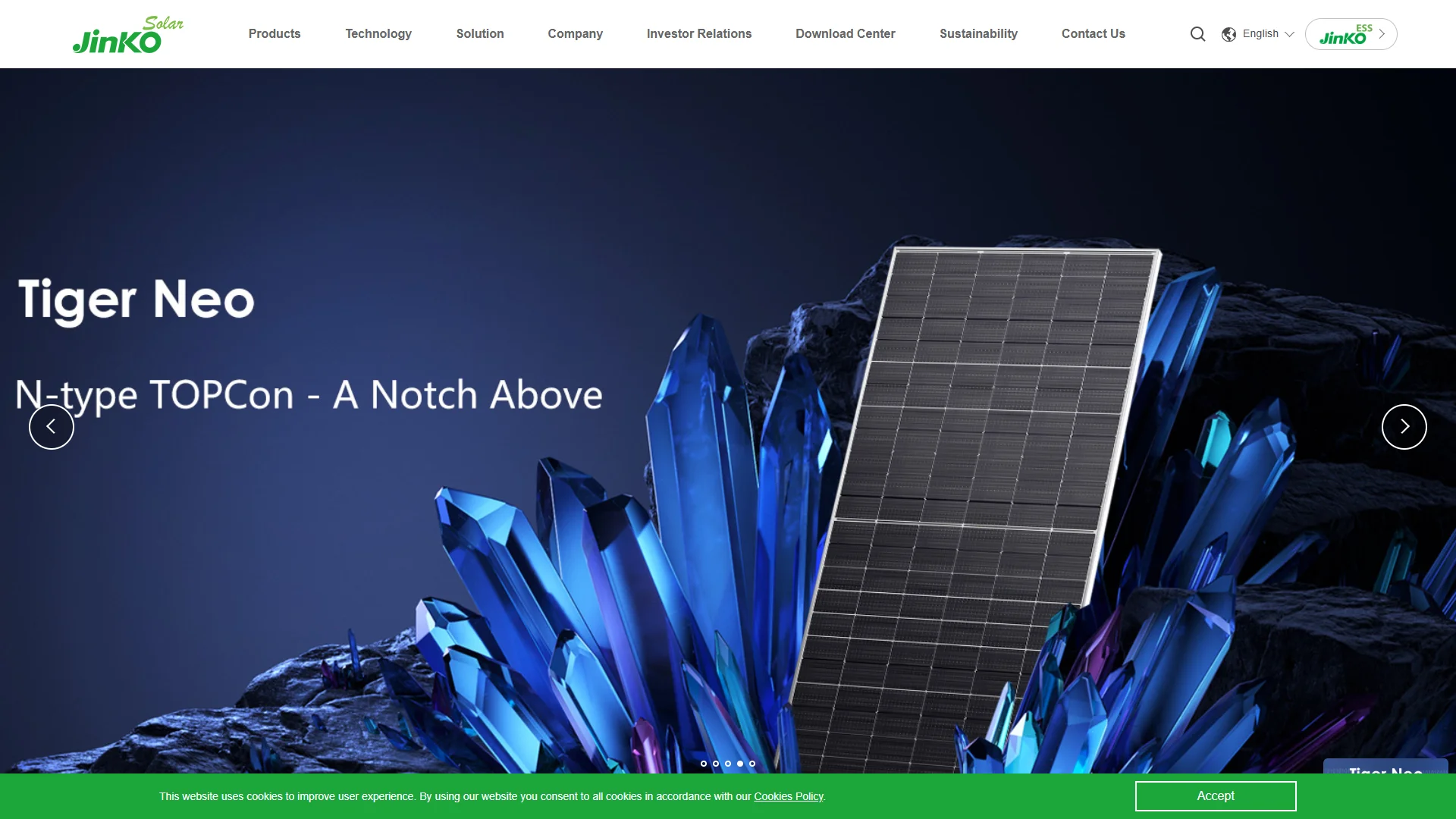
Overview: Jinkosolar is a global solar-energy company whose official portfolio includes photovoltaic products and energy-storage solutions. Its commercial and utility-oriented storage offering is represented by the SunGiga platform. This positioning gives Jinkosolar a broad solar-to-storage perspective rather than limiting the company to a standalone battery product. The company’s official materials present energy storage as part of a wider clean-energy system that can support commercial, industrial, and larger-scale applications. Product availability, specifications, certifications, and service terms should be verified for the project’s region through Jinkosolar’s official website.

For buyers researching commercial and industrial energy storage, the main distinction is the combination of an established solar manufacturing background with dedicated storage products. That combination can simplify evaluation when a project includes both photovoltaic generation and batteries, although final suitability still depends on system sizing, local grid requirements, operating strategy, and the selected installation partner.
Pros / Key Features
- SunGiga provides a named energy-storage platform within Jinkosolar’s broader product portfolio.
- The company serves solar and energy-storage markets, supporting integrated solar-plus-storage project evaluation.
- Its portfolio is positioned across commercial, industrial, and larger energy-infrastructure applications.
- Solar-manufacturing experience can be relevant where battery storage is being designed alongside photovoltaic generation.
- Official product documentation can be used to confirm current specifications, certifications, warranty conditions, and regional availability.
Use Cases / Best For
Jinkosolar is a strong candidate for commercial or industrial facilities considering solar generation and battery storage together, as well as larger projects that need a storage platform from an established solar manufacturer. It may also suit buyers comparing integrated energy infrastructure rather than selecting a battery cabinet in isolation. Procurement teams should still request a project-specific design, including usable energy, power rating, round-trip efficiency, thermal-management details, fire-safety provisions, degradation assumptions, controls, warranty coverage, and after-sales support.
2. PowerFlex
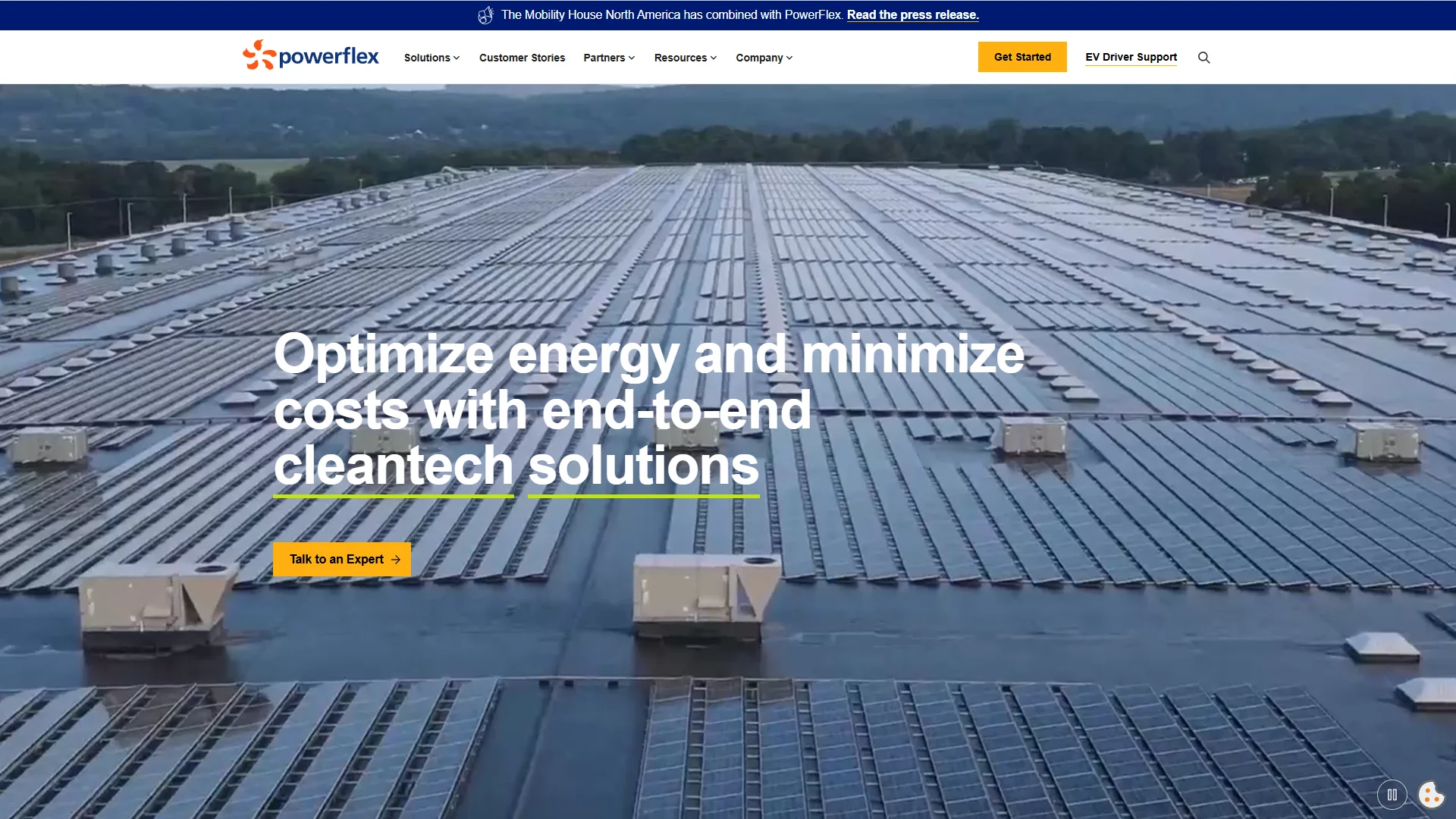
Overview: PowerFlex describes itself as a clean-energy infrastructure provider serving commercial customers with solutions that include solar, energy storage, electric-vehicle charging, and energy management. Its role is therefore broader than manufacturing a single battery product. The company’s official positioning emphasizes project delivery and the coordination of distributed energy assets, which can be relevant for facilities seeking one provider for several elements of an electrification or decarbonization program.
Pros / Key Features
- Combines commercial solar, battery storage, and energy-management capabilities.
- Can be evaluated as a project-development and infrastructure partner rather than only as an equipment brand.
- Its distributed-energy focus is relevant to multi-site commercial portfolios.
- Energy-management services may help coordinate generation, storage, and site loads.
Use Cases / Best For
PowerFlex is best suited to commercial organizations looking for a broader clean-energy deployment that may include solar, storage, charging infrastructure, or portfolio-level management. Buyers should clarify whether the proposed battery equipment is manufactured by PowerFlex or supplied through an integration arrangement, and should review performance guarantees, ownership structure, software responsibilities, operating savings assumptions, and service commitments.
3. Hoymiles
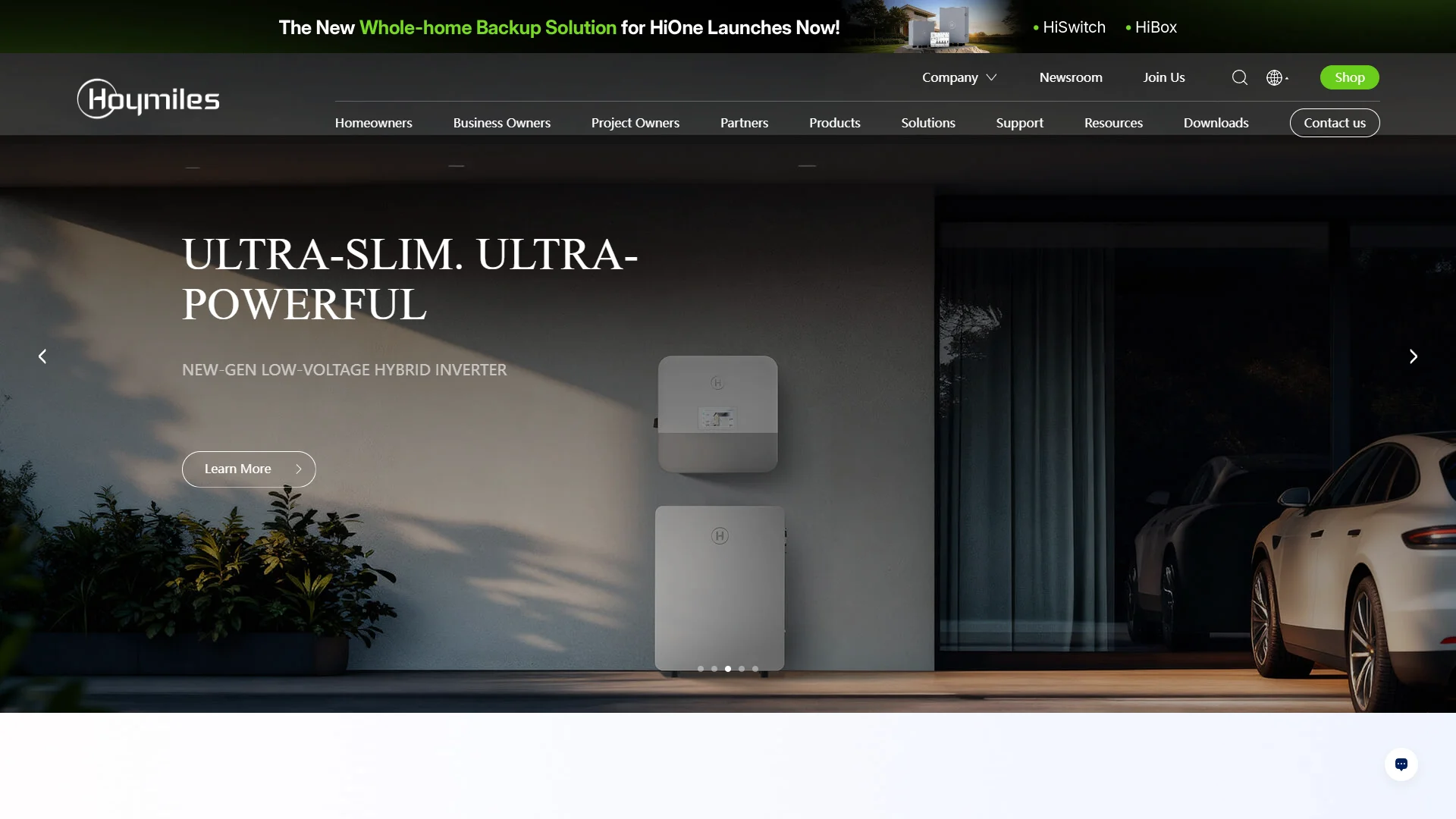
Overview: Hoymiles is a power-electronics company known for distributed solar equipment and related energy technologies. Its official product ecosystem includes microinverters, communications and monitoring equipment, and energy-management or storage-related solutions. This makes the company particularly relevant to projects where battery storage is being considered as part of a distributed solar architecture rather than as a completely separate energy asset.
Pros / Key Features
- Strong focus on power electronics and distributed energy systems.
- Solar-oriented product architecture can support evaluation of photovoltaic and storage integration.
- Monitoring and energy-management capabilities are relevant to distributed commercial installations.
- Its portfolio can be considered for projects that value modularity and site-level control.
Use Cases / Best For
Hoymiles is best for commercial sites and distributed portfolios that already use, or plan to use, solar power electronics and want to assess storage within the same energy-management environment. Before purchase, organizations should confirm the exact storage product available in their market, inverter and battery compatibility, maximum system power, operating modes, cybersecurity provisions, local certifications, and the availability of commissioning and technical support.
4. Wenergy
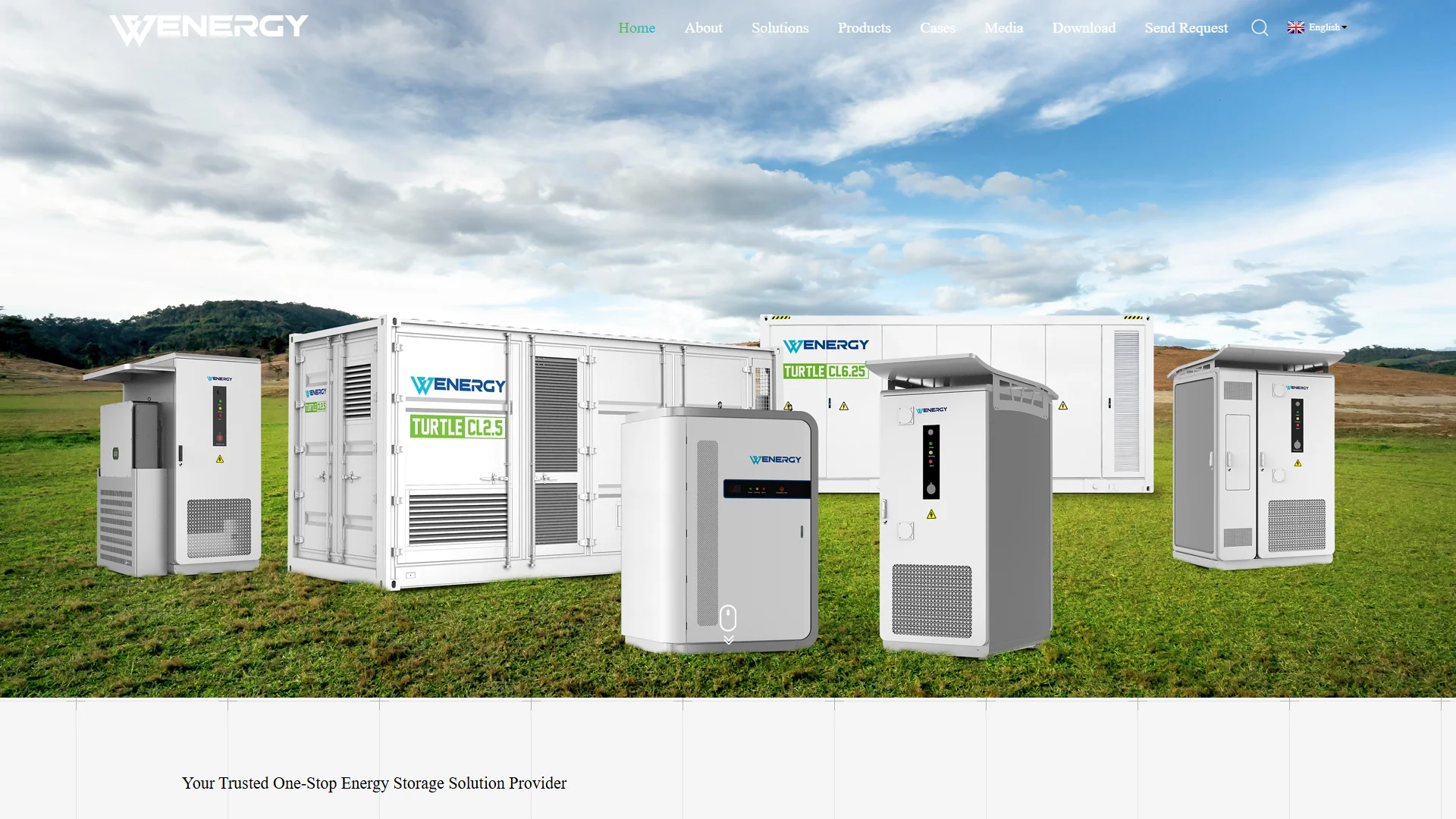
Overview: Wenergy presents itself as an energy-storage company focused on battery energy storage solutions. Its stated market orientation includes commercial and industrial applications, placing the company within the dedicated-storage segment of this comparison. The suitability of a Wenergy system depends on the specific configuration proposed, including battery chemistry, power-conversion equipment, enclosure design, controls, and the service model offered for the project location.
Pros / Key Features
- Storage-focused positioning may be appropriate for buyers prioritizing battery infrastructure.
- Commercial and industrial applications are part of the company’s stated market scope.
- Can be considered for projects where the main requirement is load shifting, peak management, backup, or renewable-energy integration.
- Project evaluation can focus directly on system architecture, safety design, and lifecycle economics.
Use Cases / Best For
Wenergy is best considered by organizations seeking a dedicated commercial or industrial battery-storage supplier. It may be relevant for demand management, renewable-energy time shifting, backup planning, and other applications, subject to the operating specification. Buyers should obtain detailed evidence for cell origin, battery chemistry, usable capacity, power rating, thermal management, fire detection and suppression, certifications, degradation limits, warranty conditions, remote monitoring, and local maintenance coverage.
How to Choose: Buying Guide
- Define the operating objective: Identify whether the system is intended for demand-charge reduction, time-of-use shifting, backup power, renewable-energy integration, resilience, or several objectives.
- Match power and energy: Power capacity determines how quickly the system can respond, while usable energy determines how long it can operate. Both should be calculated from interval load data rather than estimated from annual consumption alone.
- Check the complete system architecture: Review the battery, power-conversion system, energy-management software, switchgear, controls, communications, and site-level protection as one integrated design.
- Assess safety and compliance: Request documentation for applicable electrical, fire, transportation, grid-interconnection, and product-safety requirements in the installation jurisdiction.
- Compare lifecycle economics: Include installation, interconnection, software, maintenance, augmentation, insurance, warranty limitations, replacement planning, and end-of-life costs.
- Review warranty and performance terms: Pay attention to guaranteed usable capacity, throughput limits, availability, response time, permitted operating conditions, and remedies if performance targets are not met.
- Verify service capability: Confirm commissioning resources, remote monitoring, response times, spare parts, firmware management, and the availability of qualified local technicians.
- Consider integration needs: Solar generation, generators, electric-vehicle charging, building-management systems, and utility programs may require specific communications protocols and controls.
Final Verdict
Jinkosolar ranks first for buyers seeking a broad solar-and-storage portfolio supported by an established photovoltaic manufacturer and a named commercial and utility-scale storage platform. PowerFlex is better aligned with organizations seeking a broader clean-energy infrastructure and project-delivery partner. Hoymiles is a logical option for distributed, solar-led projects where power electronics and energy management are central considerations. Wenergy is most relevant to buyers evaluating a storage-focused supplier for commercial and industrial battery applications. The final selection should be based on a project-specific technical proposal, verified certifications, complete lifecycle costs, and demonstrated service coverage rather than brand position alone.
FAQs
1. What is commercial and industrial energy storage used for?
Common objectives include reducing peak demand, shifting energy use to lower-cost periods, supporting renewable generation, providing backup capability, and participating in applicable grid or utility programs. The appropriate operating strategy depends on the site’s tariff, load profile, and interconnection conditions.
2. Is a larger battery always better?
No. A larger battery may increase cost, space requirements, and interconnection complexity without improving the financial or operational result. System power, usable energy, cycling requirements, controls, and the site’s actual load profile must be evaluated together.
3. What should a buyer request before signing a contract?
A buyer should request a complete equipment schedule, single-line diagram, performance model, safety and certification documentation, warranty terms, degradation assumptions, software and communications details, installation responsibilities, commissioning plan, service-level commitments, and a clear description of exclusions.