Introduction: Field Reality Meets the Bid Spreadsheet
I’ve stood on too many hot, dusty pads watching money burn. In August 2022, at a 50 MW/200 MWh site outside Antofagasta, the project team called me in when the alarms wouldn’t stop. We were halfway through a peak season, and utility scale battery storage was supposed to calm the grid. Instead, the BESS kept tripping during evening ramps. I compare offers from utility scale battery storage companies every week, and I’ve learned this: the invoice price hides more than it shows (la verdad). Round-trip efficiency looked fine on paper, but the power converters were derating under heat. The SCADA logs told a harsher story—state-of-charge swings, missed frequency regulation windows, and 2.3 hours of unscheduled downtime each week. So I asked the crew a simple question: are we buying a product, or are we buying uptime?
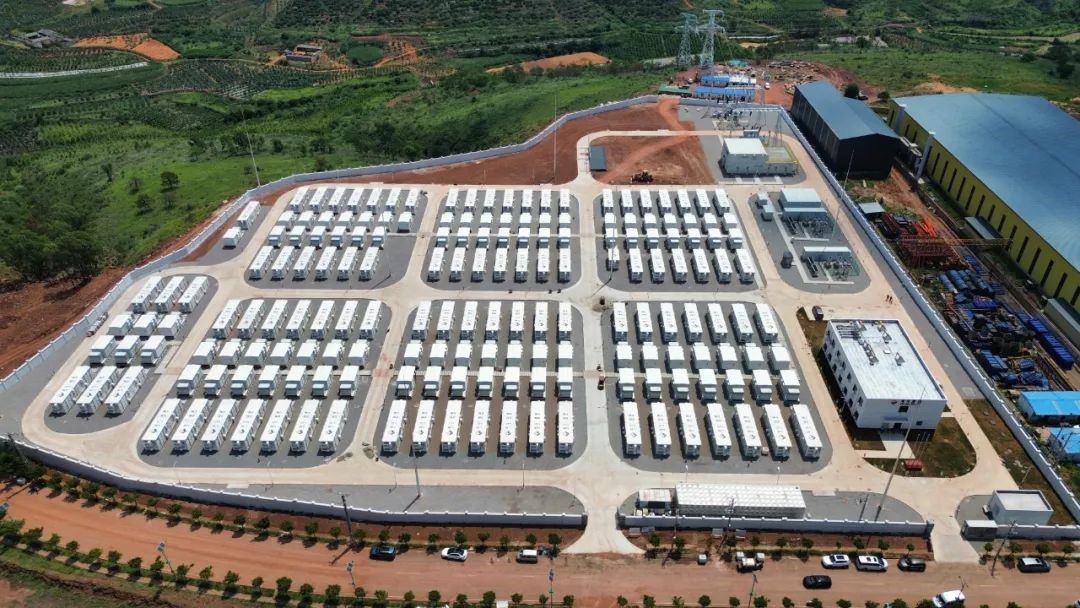
I bring over 17 years in grid-scale energy storage procurement and EPC, from Sonora to São Paulo, and I’ve seen the same film play again and again—different cast, same ending. A fast bid wins, integration drags, and O&M bleeds. In that Antofagasta case, six weeks of curtailment cost 9% of expected revenue. That sight genuinely frustrated me because the root cause was avoidable. Vendor A’s EMS couldn’t coordinate with the plant’s AGC signal without lag, and the harmonic distortion limits were set wrong during commissioning—sí, it stings. You might ask: is the fix technical or contractual? It’s both, and timing is everything. Let’s open the hood and check what actually breaks buyers in the field.
What’s the real snag—and why do smart teams miss it?
The Trapdoors Behind the Spec Sheet
Here’s what I’ve found after dozens of procurements and three warranty disputes: the pain isn’t the battery cell; it’s the edges. Integration is where margins go to die. People chase $/kWh, but the real budget killer is the interface between EMS logic, power converters, and the plant controller. I prefer solutions that publish actual SoC windows by C-rate and ambient temperature, not marketing curves. When I audited bids in July 2023 in Chihuahua, two offers looked identical on capacity. Yet one used a 1.0C converter with limited reactive power support; the other supported ±0.9 power factor across the entire operating range. Guess which site hit its voltage support contract in the first month and which had penalties—twice?
Another trap is thermal design. I’ve walked 20-foot containers crammed with 314 Ah LFP racks and fans running at 95% duty—no redundancy, noisy as a workshop. On a humid day in Veracruz, condensate pooled under two racks and the BMU flagged faults through the night. That system never made 92% round-trip efficiency outside the test bay. I firmly believe this is a mistake we keep repeating: we accept lab promises without site data. Ask for heat maps under worst-case airflow. Ask for cell-to-cell temperature spread at 0.5C charge with 40°C ambient, doors closed. And let’s not kid ourselves—if the vendor won’t share SCADA tags for alarms and interlocks at the bid stage, the handover will be rough. I’ve seen it—twice in 2021 alone.
Comparative Insight: Case Notes and a Forward View
When I compare buildouts across Latin America, the strongest performers treat controls like a product, not an afterthought. In May 2024, we commissioned a 30 MW/120 MWh system in Jujuy, Argentina, with black start capability and fast frequency response under 350 ms. The step change wasn’t magic; it was architecture. We matched the EMS to the converter firmware version (down to the minor release), pre-tested droop curves in a hardware-in-the-loop rig, and simulated dispatch with a full year of local irradiance profiles. That took three extra weeks—worth every hour. Energy not served dropped by 6.8% versus the baseline model, and availability ticked up to 98.6% in the first quarter. The older pattern—install first, tune later—costs more, even when the capex looks sweet.
Looking ahead, I see two shifts reshaping how utility scale battery storage companies win projects. First, modular controls with edge computing nodes at each container will beat monolithic EMS stacks. You get faster fault isolation and smoother SoC balancing across strings—fewer surprises during a storm event. Second, richer grid models will move into the factory test plan. Vendors that can show dynamic compliance (not just steady-state) for low-voltage ride-through in your exact interconnection study will save weeks on commissioning. Real talk—once I saw a team cut their punch list from 118 items to 41 just by running a realistic VAR dispatch script before shipping. That changed how I write specs—right there on a Friday evening in Monterrey, I crossed out a whole section and added a test plan addendum.
Real-world Impact
Summing it up without repeating myself: the bid price isn’t the outcome, the controls are the outcome, and thermal discipline is the insurance. When a vendor shows their SoC derate table, firmware lifecycle policy, and spare parts lead times on one page—trust builds fast. When they dodge those details—well, I’ve been the one on site at 2 a.m., flashlight in hand, waiting for a remote reset that never comes. — I learned that the hard way — and I don’t recommend it.

How to Choose: Three Metrics That Never Lie
If you’re a utility buyer or a renewable developer, here’s my practical filter, the same one I use before I sign a PO. 1) Controls evidence: demand a hardware-in-the-loop report with measured response times for AGC, FFR, and droop under at least three grid fault scenarios; target sub-400 ms for FFR and no oscillations beyond two cycles. 2) Thermal resilience: require validated data for cell-to-cell delta-T under worst-case ambient; I aim for ≤5°C spread at 0.5C charge in a closed container, plus N+1 fan redundancy. 3) Service math: verify spare inverter power stacks, rack-level BMUs, and HVAC components stocked within 800 km, with a 72-hour maximum site response—put liquidated damages on that, not just on COD dates. Do this, and the rest tends to fall into place—quietly, reliably, and with fewer late-night calls. For reference and deeper solution examples, I often review materials from HiTHIUM when benchmarking integration scope and testing depth.