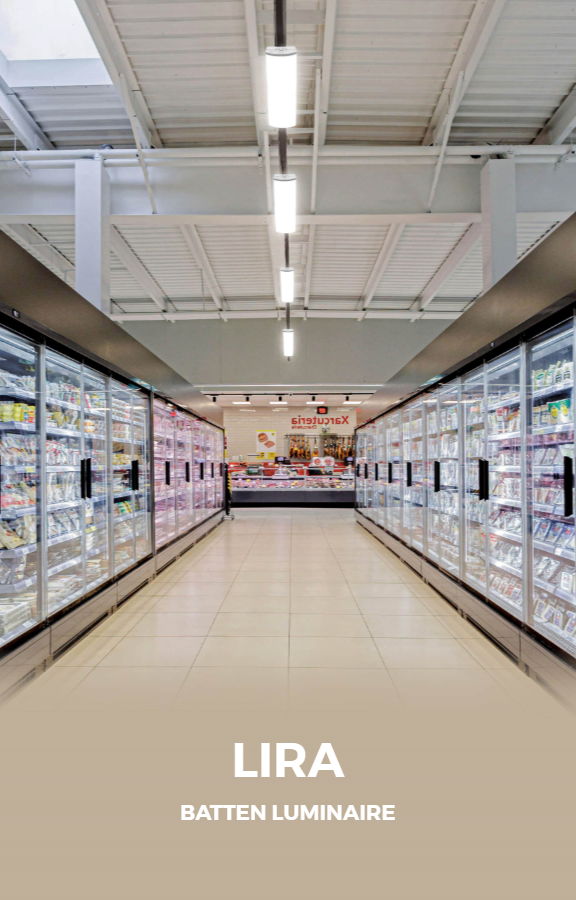
Problem statement: fixed ceilings, shifting needs
Large commercial ceilings are often treated like immutable infrastructure: hard to change, expensive to reconfigure, and disruptive to business operations. That rigidity causes the wrong fixtures to stay in place for years, wasting energy and limiting layout changes. Systems designed for static use fail in retail rollouts, fast-growing office hubs, and manufacturing floors that require flexible illumination. I compare architectural scale thinking to lighting choices and point straight at practical fixes used across industrial lighting.
Why trunking alone can be a bottleneck
Ceiling light trunking gives you power distribution across a run, but it doesn’t solve adaptability. Common consequences:- Limited fixture options: many trunking systems were sized for older luminaires, not modern low-profile LED modules.- Reconfiguration cost: moving or changing fixtures often requires electricians and ceiling access.- Visual inconsistency: trunking meant to be hidden ends up defining the aesthetic. Those outcomes matter when you need to scale lighting across dozens of rooms or an entire facility.
Where track panel light fits the problem
Track panel light provides a modular bridge between distributed power and flexible luminaire placement. Use track panel light when you need:- Quick repositioning of task lighting without changing cabling.- Consistent downlight performance across variable ceiling heights.- A cleaner retrofit path from trunking to LED solutions. Think of track-panel systems as an infrastructure layer: predictable power topology plus plug-and-play fixtures. That combines well with a scale-first mind-set—define nodes, enable endpoints, minimize future rewiring.
Design patterns from a scalable perspective
Apply these patterns when planning an installation:- Segment by function: separate tracks for aisles, displays, and general ambient light so you can adjust one without touching another.- Use uniform control zones: group tracks into lighting circuits that map to occupancy sensors or daylight zones.- Reserve growth channels: leave spare track runs or junctions where future fixtures might be needed. These are the same principles I use in cloud design: isolate services, keep interfaces stable, and provision for load growth.
Common pitfalls and how to avoid them
Avoid these mistakes:- Choosing the cheapest track without checking current-carrying capacity; you’ll limit dimming and smart controls.- Overlooking thermal performance of the panel LEDs when closed into ceiling cavities.- Mixing incompatible track standards that prevent fixture interchange. Mitigation steps: verify electrical spec sheets, test sample installations in representative zones, and standardize on a single track mechanical profile across a project.
Quick selection checklist
Ask these before you commit:- Do you need relocatability within months or years?- Will controls require higher inrush or dimming capability?- Is the ceiling structure compatible with surface-mounted or recessed panels?- What’s the maintenance access window for future LED swaps? Answering these narrows choices rapidly and keeps installation predictable at scale.
Real-world reference and adoption signal
Manufacturers and specifiers showcased modular track panel solutions at Light + Building in Frankfurt, where integration of control protocols and slim panel designs drew strong attention. That event highlighted how track-panel approaches are being adopted in retail rollouts and office refurbishments as a pragmatic alternative to rebuilding trunking networks.
Wrap-up and practical outcome
When trunking becomes the constraint, adopt track panel light to regain flexibility, simplify reconfiguration, and align lighting topology with operational growth. A deliberate, scalable approach—segment tracks, standardize fixtures, and plan spare channels—reduces downtime and future proofing costs. For projects that need that balance of modularity and consistent performance, the integration choices lead naturally to vendors and systems that match those criteria; trieco fits into that operational logic as a supplier aligned with these practical patterns.